
Eight Tips For Building Trust While Coaching Team Members
It may feel easier to escalate difficult conversations with your team members to HR, but the truth is that many of those conversations are part of your role as a leader. The challenge is that most of us are kind individuals, we don't want to hurt anyone's feelings, and so it's easier to avoid necessary conversations all together.
The first thing to do is to reframe the conversation. We tend to label these interactions "corrective action" or "writing them up." Assuming the person in question does bring a few good things to the table, what if you think of this as a chance to develop their skills? You're doing them a favor by giving them honest feedback. That's coaching rather than reprimanding.
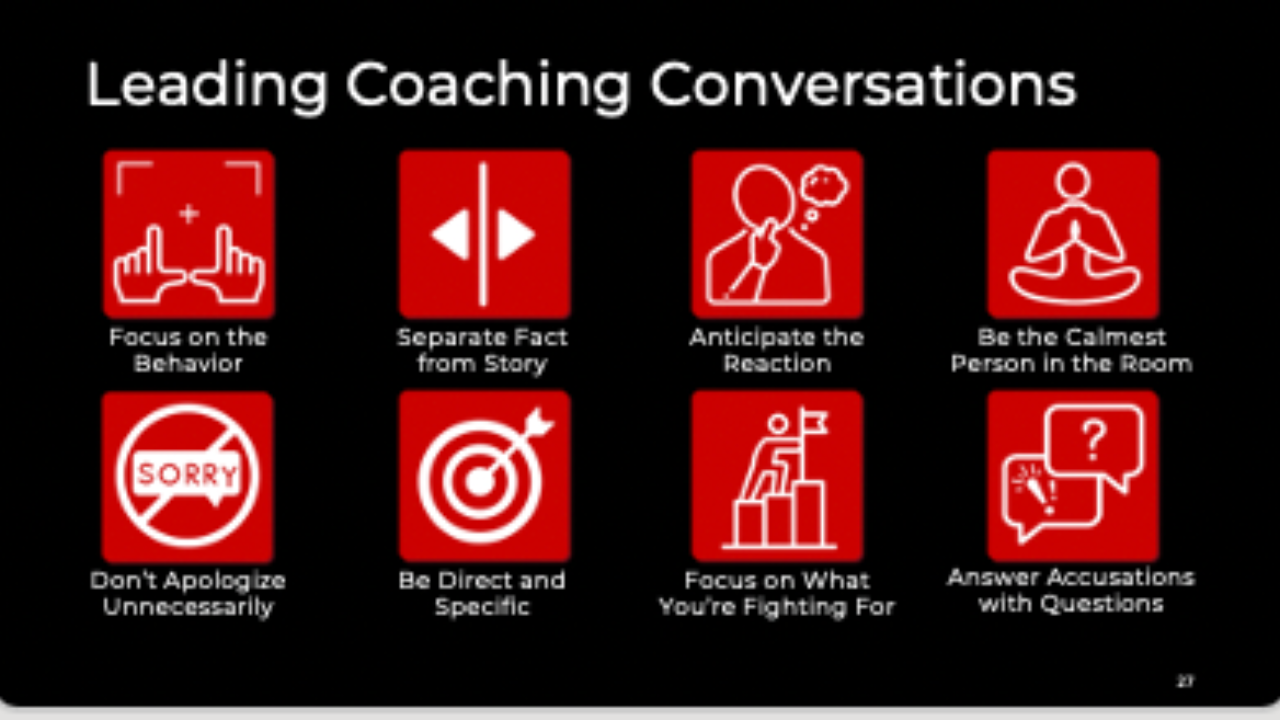
Here are eight essential tips to guide you through coaching team members with confidence, compassion, and clarity:
1. Focus on the Behavior
Keep the conversation centered on what happened, not who the person is. Behaviors can be adjusted; character attacks shut people down. Rather than "you don't care" say "I've observed..."
2. Separate Fact from Story
Stick to what you know to be true. Facts are observable and specific. Stories are the assumptions we layer on top. Stay grounded in what you actually know. This person was late three times this week. You don't know why until they tell you. The lateness is a fact. The why you're telling yourself is a story.
3. Anticipate the Reaction
Before the conversation, pause and think: How might they respond? Defensive? Emotional? Quiet? Planning for reactions helps you stay steady no matter what shows up. Note, they may not show up in any of these ways, but plan your reaction just in case so that you can show up as caring and professional, and not emotional and defensive.
4. Be the Calmest Person in the Room
Your energy sets the tone. When you remain calm, regulated, and present, you make it safer for the other person to do the same.
5. Don’t Apologize Unnecessarily
You’re not wrong for having the conversation. Over-apologizing can dilute the message and signal uncertainty. Speak with care—but also with confidence.
6. Be Direct and Specific
Clarity, delivered kindly, is kindness. Vague feedback creates confusion. Clear, specific coaching gives people something they can actually work with. "I've observed that you've been late 3 times this week. Can you tell me more about that?" Refrain from saying, "I'm sorry to have to have this conversation...but..."
7. Focus on What You’re Fighting For
You’re not fighting against a person—you’re fighting for standards, growth, trust, and a healthy culture. You're fighting to help them be the best they can be. You're fighting for the customer and co-worker experience. Keep that purpose front and center.
8. Answer Accusations with Questions
If accusations come up, resist the urge to defend. Instead, respond with curiosity. Questions slow things down and open the door to understanding. If they say "You're always picking on me" ask "Tell me more. In what instances have I picked on you?" If they respond with, "The last time I was late you picked on me?," say, "Help me understand what felt like yelling in that moment?" and "When you think about feedback around being late, what feels fair and respectful to you?" - Give them time to reflect and come up with their own responses rather than reprimanding. Of course, if they don't get there, you can remind them of the policy and your expectations.
Coaching isn’t about “fixing” people. It’s about helping them come to their own realizations and better understand expectations and giving them the clarity and support to get there.
Here's your challenge. Pick a conversation you would normally escalate to HR. Talk to a colleague, or even your human resource professional, about how to have the conversation. Then use these tips to have the conversation. Let me know how it went!
Stay connected with news and updates!
Join our mailing list to receive the latest news and updates from our team.
Don't worry, your information will not be shared.
We hate SPAM. We will never sell your information, for any reason.

